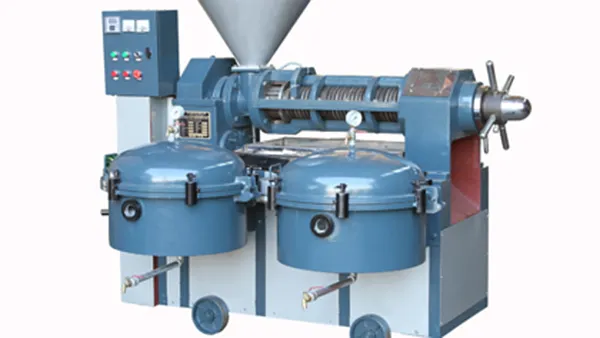
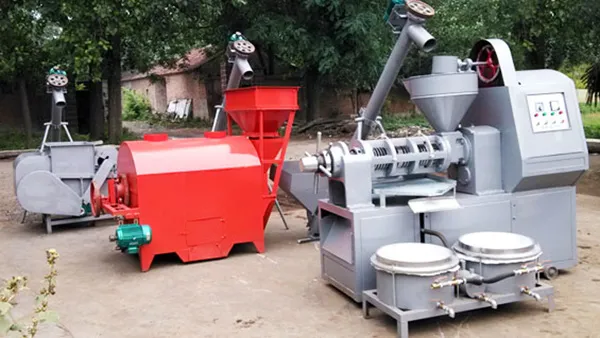
In the production of animal feed粕, a solvent recovery system plays a crucial role. Its core objectives are to reduce solvent loss and improve desolventizing efficiency. Solvent loss not only increases production costs but also poses environmental risks. For example, in traditional soybean oil solvent extraction processes, solvent loss can reach up to 5% of the total solvent used. With an effective solvent recovery system, this loss can be reduced to less than 2%, which is a significant cost - saving for feed粕 production enterprises. The improvement of desolventizing efficiency directly affects the quality of the final feed粕 product. A high - efficiency desolventizing process can ensure that the solvent residue in the feed粕 is below 50 ppm, meeting strict quality standards.
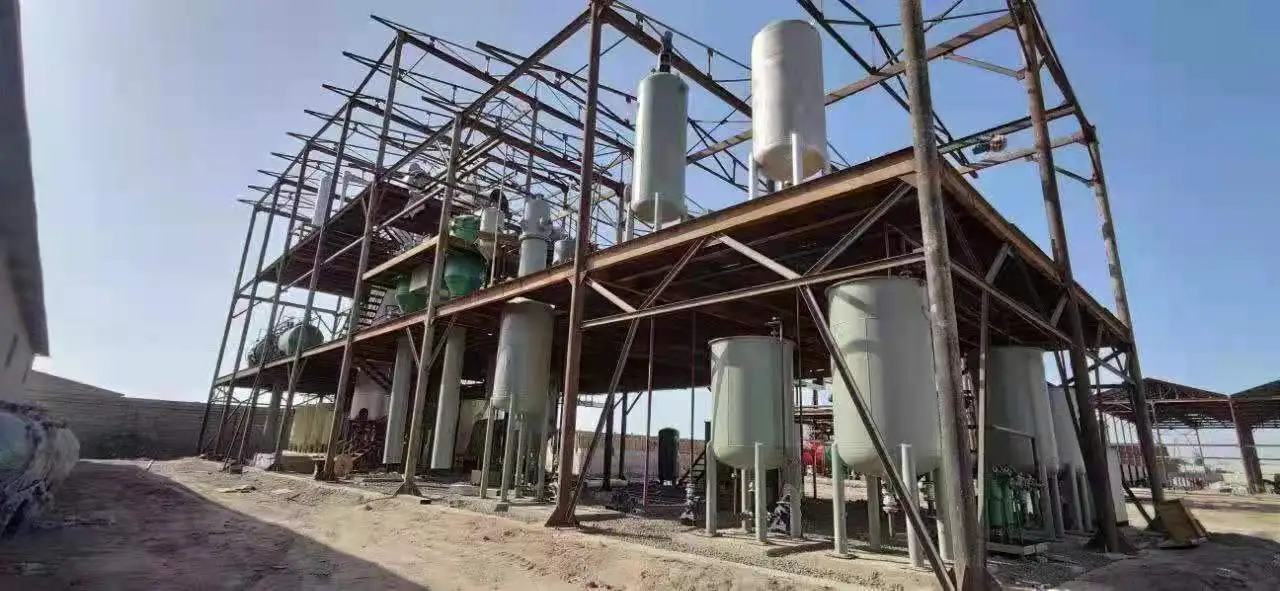
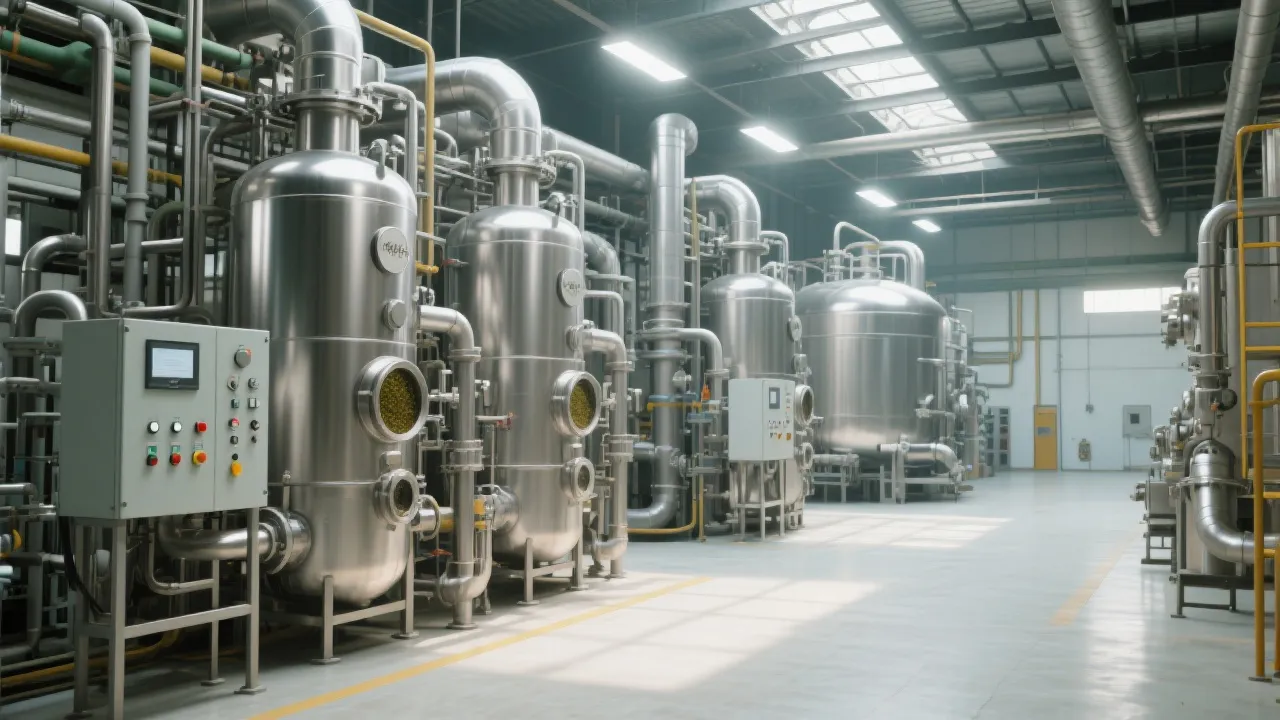
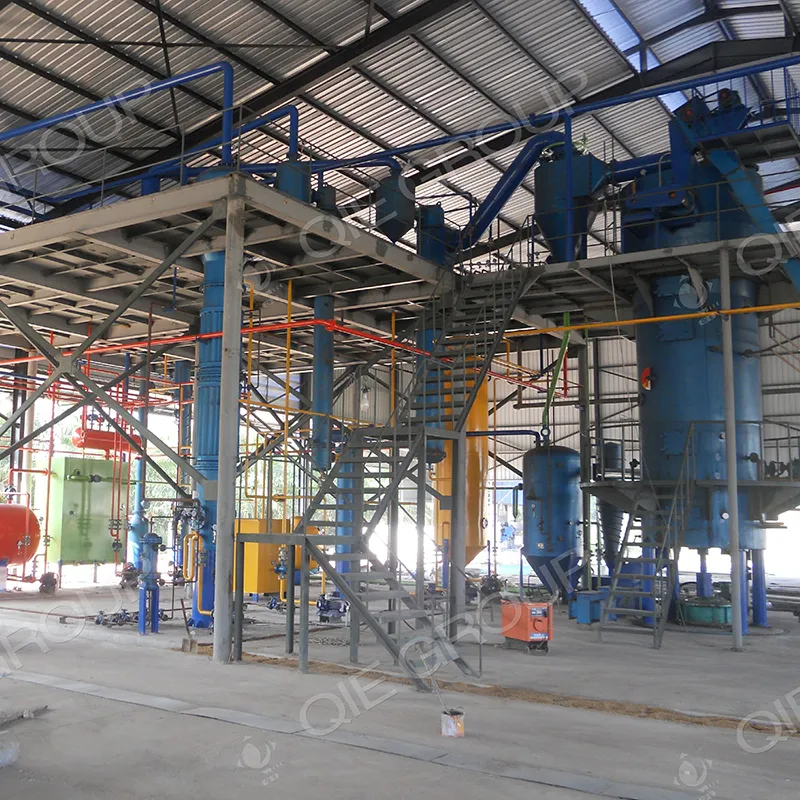
The leaching tower, evaporator, stripper, and condensation recovery device are the key components of the system. The leaching tower is responsible for extracting oil from the soybean using solvents. It should be selected according to the production scale and raw material characteristics. For a medium - sized feed粕 production line, a continuous counter - current leaching tower is usually the best choice, which can ensure high - efficiency extraction. The evaporator then separates the solvent from the miscella. The evaporation efficiency is closely related to the temperature and pressure control. Generally, the evaporation temperature should be controlled between 60 - 80°C to ensure the stability of the solvent and the quality of the miscella. The stripper further removes the remaining solvent from the wet粕. The steam flow rate and temperature in the stripper are critical factors. A proper steam flow rate can ensure that the solvent is completely removed without causing excessive energy consumption. The condensation recovery device recycles the evaporated solvent. By adjusting the cooling water temperature and flow rate, the solvent recovery rate can reach over 98%.
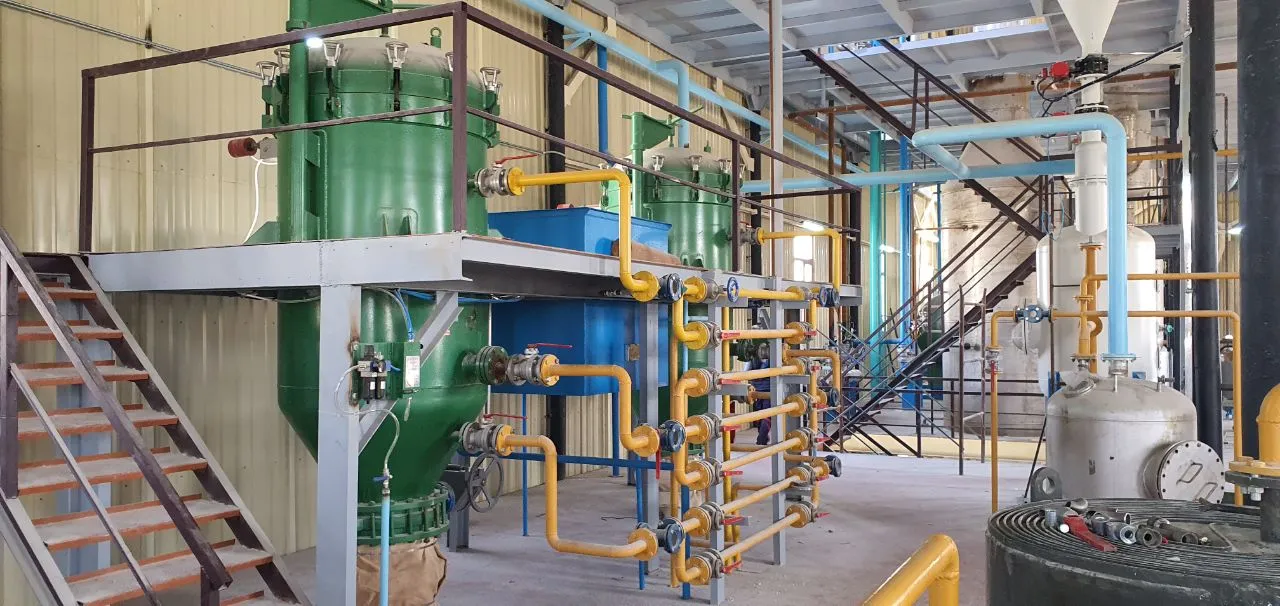
Reasonable space planning is essential for reducing pipeline resistance and improving heat energy utilization. When designing the process layout, the distance between equipment should be minimized to reduce the length of pipelines. For example, the leaching tower and the evaporator should be placed as close as possible to reduce the pressure loss in the pipeline. In addition, heat insulation materials should be used for pipelines to reduce heat loss. By optimizing the layout, the pipeline resistance can be reduced by 30%, and the heat energy utilization rate can be increased by 20%. This not only saves energy but also improves the overall efficiency of the system.
Let's take a real - world case. A feed粕 production plant had problems such as high solvent residue, high energy consumption, and safety risks. The solvent residue in the feed粕 was as high as 150 ppm, which exceeded the standard. After analyzing the process, it was found that the main reasons were improper equipment configuration and unreasonable process layout. The evaporation temperature was too high, resulting in high energy consumption, and the condensation recovery device was not working efficiently, leading to high solvent residue. By optimizing the equipment configuration, adjusting the process parameters, and improving the layout, the solvent residue was reduced to below 50 ppm, and the energy consumption was reduced by 25%. This case shows that by analyzing and solving common problems, feed粕 production enterprises can achieve energy - saving and high - efficiency production.
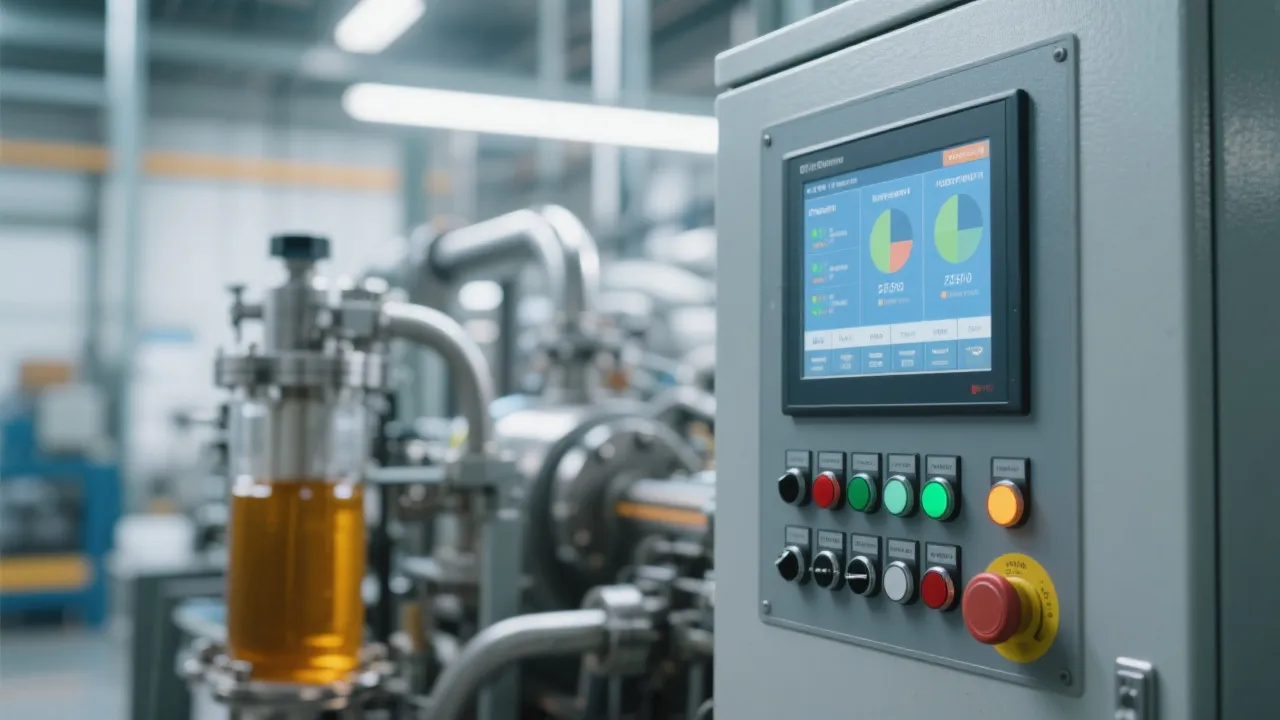
Regular inspection and parameter monitoring are crucial for the stable operation of the system. A daily inspection list should include checking the equipment operation status, pipeline connections, and temperature and pressure parameters. For example, the temperature of the evaporator should be checked every 2 hours to ensure it is within the normal range. In case of common faults such as solvent leakage or equipment blockage, an emergency response process should be in place. For solvent leakage, the first step is to stop the relevant equipment immediately and then repair the leakage point. By following these operation and maintenance essentials, the system can run stably for a long time.
Ready to optimize your animal feed粕 processing system? Download our "Efficient Solvent Recovery System Operation Manual" or book a free technical consultation today!
 soybean oil refining process
de-gumming and deodorization system
small oil processing plant equipment
food safety compliance in oil refining
energy-efficient oil refining technology
soybean oil extraction efficiency
automatic filtration press
small oil mill optimization
hot vs cold pressing soybean oil
oil yield improvement
soybean oil extraction efficiency
automated filtering press
small oil mill optimization
hot vs cold pressing
continuous oil pressing system
soybean oil refining process
energy-saving deodorization technology
edible oil emission compliance
small to medium oil processing plants
deodorization equipment for food safety
Continuous pressing equipment
Filtration system
Soybean oil press
Comprehensive oil extraction rate improvement
Intelligent control system
soybean oil refining process
de-gumming and deodorization system
small oil processing plant equipment
food safety compliance in oil refining
energy-efficient oil refining technology
soybean oil extraction efficiency
automatic filtration press
small oil mill optimization
hot vs cold pressing soybean oil
oil yield improvement
soybean oil extraction efficiency
automated filtering press
small oil mill optimization
hot vs cold pressing
continuous oil pressing system
soybean oil refining process
energy-saving deodorization technology
edible oil emission compliance
small to medium oil processing plants
deodorization equipment for food safety
Continuous pressing equipment
Filtration system
Soybean oil press
Comprehensive oil extraction rate improvement
Intelligent control system




.png?x-oss-process=image/resize,h_100,m_lfit/format,webp)
.png?x-oss-process=image/resize,h_100,m_lfit/format,webp)
.png?x-oss-process=image/resize,h_100,m_lfit/format,webp)