What Is an Edible Oil Processing Line? From Oil Extraction to Refined Oil
Qi'e Grain and Oil Machinery Co., Ltd.
2026-09-26
Concept Explanation
Qi'e Grain and Oil Machinery Co., Ltd. explains the main stages of an edible oil processing line, including oilseed pretreatment, pressing or solvent extraction, crude oil treatment, soybean oil refining, and final oil handling.

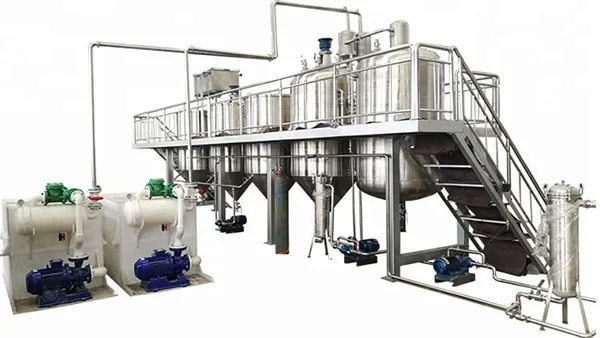
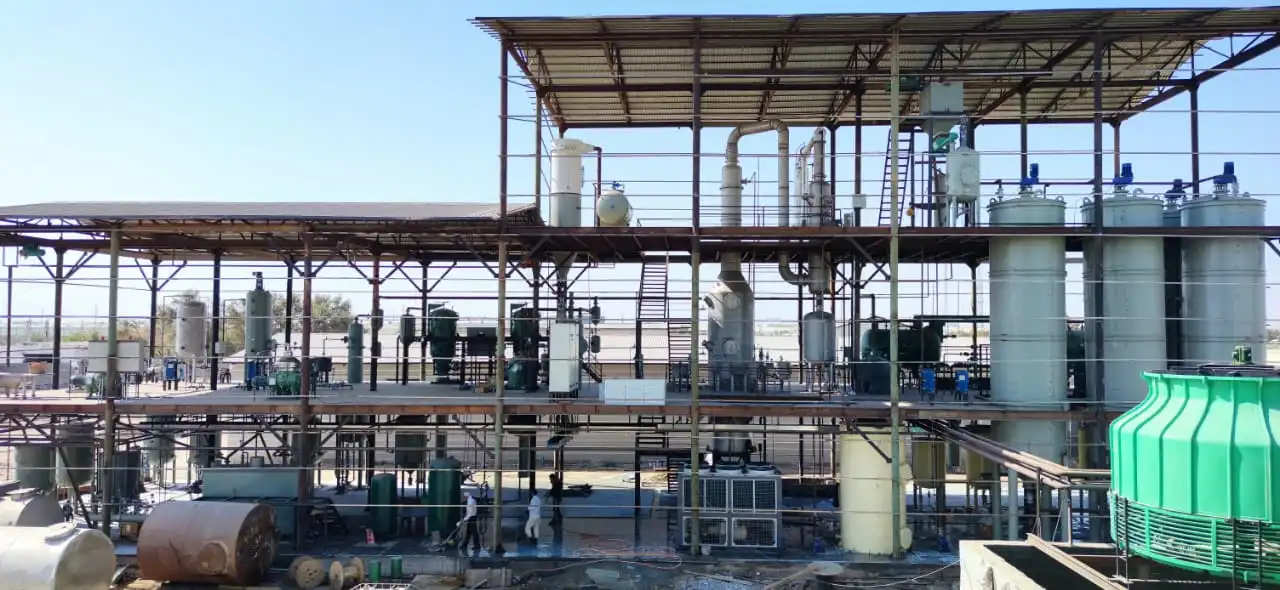
An edible oil processing line integrates the main stages required to convert oilseeds into crude oil, refined vegetable oil, and a finished product suitable for further handling or distribution. Qi'e Grain and Oil Machinery Co., Ltd. provides edible oil processing solutions covering oilseed pretreatment, pressing or solvent extraction, crude oil treatment, vegetable oil refining, and final oil handling.
How an Edible Oil Processing Line Works
The complete processing route depends on the type of oilseed, the required production capacity, the characteristics of the crude oil, and the quality requirements for the finished oil. In a typical line, raw materials are prepared before oil extraction, and the crude oil is then treated through refining stages that improve its appearance, flavor, stability, and suitability for different applications.
The same overall production concept can be adapted for soybean, palm kernel, sunflower seed, and other oil-bearing materials. Extraction may be carried out by mechanical pressing, solvent extraction, or a combination of both, followed by appropriate crude oil treatment and final oil handling.
Main Stages of an Edible Oil Processing Line
| Stage |
Primary purpose |
Typical output |
| Oilseed pretreatment |
Prepare the oilseed for efficient and consistent extraction. |
Conditioned raw material |
| Pressing or solvent extraction |
Separate oil from the prepared oilseed material. |
Crude oil and oilseed meal or residue |
| Crude oil treatment |
Remove or reduce impurities that may affect downstream refining. |
Conditioned crude oil |
| Vegetable oil refining |
Improve oil quality through degumming, neutralization, bleaching, deodorization, and optional winterization. |
Refined edible oil |
| Final oil handling |
Complete final filtration and prepare the oil for storage, packaging, or distribution. |
Filtered and handled finished oil |
Soybean Oil Refining Within the Integrated Line
Soybean oil refining is an important part of an edible oil processing line. Crude soybean oil can contain phospholipids, free fatty acids, pigments, waxes, trace metals, and volatile compounds. The refining sequence is designed to reduce these substances and produce oil with improved clarity, flavor, color, and storage stability.
1. Degumming
Water or dilute acid can hydrate phospholipids so that they become easier to separate from the oil. Enzymatic degumming may also be used to break down certain phospholipids and support their removal. This stage helps improve the stability of the oil during subsequent processing and storage.
2. Neutralization
In chemical refining, an alkali such as sodium hydroxide reacts with free fatty acids to form soapstock. The soapstock and associated impurities can then be separated by suitable separation equipment. Neutralization helps reduce acidity and improve the flavor and stability of the oil.
3. Bleaching
Bleaching earth or activated clay adsorbs pigments such as chlorophyll and carotenoids, as well as selected trace impurities. The oil is commonly treated under vacuum and then filtered to remove the spent bleaching material, producing a lighter and clearer oil.
4. Deodorization
Deodorization uses steam distillation under vacuum to remove volatile compounds, residual free fatty acids, and substances that contribute to undesirable odors or flavors. The result is a more neutral-tasting and neutral-smelling refined oil.
5. Optional winterization
Winterization may be included when the oil must remain clear at lower temperatures. The oil is cooled so that waxes and other higher-melting components crystallize, after which the solid particles are separated by filtration.
Why Process Integration Matters
- The pretreatment and extraction sections provide the starting crude oil for downstream refining.
- Refining stages can be arranged according to the characteristics of the oilseed and the intended use of the finished oil.
- Final filtration and handling help ensure that the refined oil is ready for storage, packaging, or distribution.
- Integrated planning makes it easier to coordinate process flow, equipment selection, installation, and technical service.
Equipment and Solution Planning
The appropriate edible oil processing line should be planned around the raw material, required oil quality, production scale, available utilities, and local operating conditions. Mechanical pressing may be suitable for some applications, while solvent extraction or a combined route may be considered where the process objective requires it. Soybean oil refining equipment can then be configured to support the necessary degumming, neutralization, bleaching, deodorization, winterization, filtration, and handling operations.
Qi'e Grain and Oil Machinery Co., Ltd. focuses on oil pressing equipment, oil production line equipment, and oil refining equipment. Its B2B services cover solution design, equipment manufacturing, installation, and technical support, helping customers evaluate an edible oil processing line as a complete project rather than as isolated machines.
Applications for Different Oilseeds
The integrated processing approach can be adapted to different oilseed projects, including soybean oil, palm kernel oil, sunflower oil, and other vegetable oils. Each raw material may require a different pretreatment, extraction route, and refining sequence. For this reason, project discussions should consider the feedstock characteristics and the desired finished-oil specifications before equipment selection.
A complete solution starts with process requirements.
By connecting oilseed pretreatment, extraction, crude oil treatment, soybean oil refining, and final oil handling, an edible oil processing line can be developed around the actual needs of the project.


.png?x-oss-process=image/resize,h_100,m_lfit/format,webp)
.png?x-oss-process=image/resize,h_100,m_lfit/format,webp)
.png?x-oss-process=image/resize,h_100,m_lfit/format,webp)




.jpg?x-oss-process=image/resize,m_fill,h_800,w_800/format,webp)





