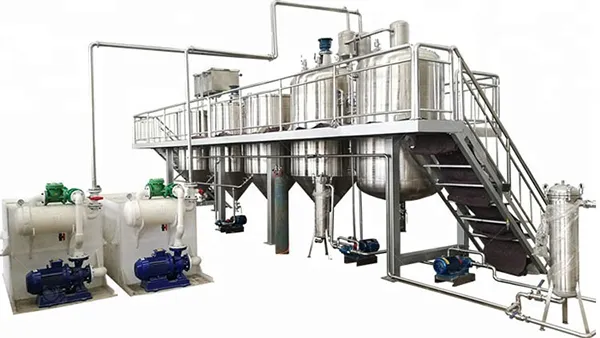
Selecting an inappropriate oil for baking can compromise the flavor profiles and shorten the shelf life of pastries significantly. This article explores the critical role that low free fatty acid (FFA) refined soybean oil plays in elevating both the sensory and functional qualities of baked goods. By employing advanced multi-stage refining processes — including degumming, neutralization, bleaching, and deodorization — this oil achieves exceptional stability and high-temperature resilience, resulting in improved dough structure, prolonged freshness, and authentic ingredient flavor retention.
Free fatty acids (FFA) adversely affect oil quality by accelerating oxidative degradation, causing off-flavors, discoloration, and reduced smoke points. Typical unrefined oils may contain FFAs upwards of 2-5%, which in baking leads to increased rancidity risk and inconsistent crust color. Lowering FFA content below 0.1% ensures the oil remains chemically stable under high baking temperatures (up to 230-250°C), preventing premature oxidation and maintaining the visual and aromatic integrity of the pastry.
Low FFA refined soybean oil undergoes a meticulously controlled process:
These stages collectively elevate the oil’s smoke point to around 230–250°C and improve its oxidative stability by 30-40% compared to conventional refined oils, making it ideal for repeated short baking cycles.
Real-world baking trials illustrate clear advantages of low FFA refined soybean oil:
| Quality Attribute | Conventional Soybean Oil | Low FFA Refined Soybean Oil |
|---|---|---|
| Free Fatty Acid Content | 2.5–5% | < 0.1% |
| Smoke Point (°C) | 210–220 | 230–250 |
| Crust Opening/Cracking | Higher incidence (approx. 8-12%) | Reduced by 40%, more uniform structure |
| Shelf Life Stability (days) | Average 5–7 days | Extends to 10–14 days with consistent product quality |
These improvements translate to tangible benefits for bakers aiming for superior product consistency and longer market presence.
 solvent extraction equipment for soybean meal
advanced feed pellet processing
low oil content soybean meal
solvent recovery system
sustainable feed manufacturing
Modular soybean oil refining equipment
Soybean oil refining equipment installation cost
Energy - efficient edible oil equipment
304 stainless steel refining equipment
Grain and oil processing equipment selection
soybean oil refining equipment
energy-efficient oil refining machinery
304 stainless steel oil processing equipment
modular oil refining systems
grain and oil processing plant installation
soybean oil press machine
automatic oil extraction system
cold press vs hot press
oil yield optimization
small oil mill equipment
Continuous pressing line
Soybean oil press
Automatic filtration system
Upgrade of small and medium-sized oil mills
Intelligent grain and oil equipment
solvent extraction equipment for soybean meal
advanced feed pellet processing
low oil content soybean meal
solvent recovery system
sustainable feed manufacturing
Modular soybean oil refining equipment
Soybean oil refining equipment installation cost
Energy - efficient edible oil equipment
304 stainless steel refining equipment
Grain and oil processing equipment selection
soybean oil refining equipment
energy-efficient oil refining machinery
304 stainless steel oil processing equipment
modular oil refining systems
grain and oil processing plant installation
soybean oil press machine
automatic oil extraction system
cold press vs hot press
oil yield optimization
small oil mill equipment
Continuous pressing line
Soybean oil press
Automatic filtration system
Upgrade of small and medium-sized oil mills
Intelligent grain and oil equipment





.png?x-oss-process=image/resize,h_100,m_lfit/format,webp)
.png?x-oss-process=image/resize,h_100,m_lfit/format,webp)
.png?x-oss-process=image/resize,h_100,m_lfit/format,webp)
.jpg?x-oss-process=image/resize,h_800,m_lfit/format,webp)