

Integrated Grain and Oil Processing Expertise
Qi'e Grain and Oil Machinery Co., Ltd. provides equipment and project solutions for grain and oil processors, covering oil pressing equipment, oil production lines, edible oil refining equipment, project design, installation, and technical service. For soybean oil processing, the refining process is a practical example of how equipment configuration, process control, and product objectives work together to convert crude oil into refined edible oil suitable for food and industrial applications.
A suitable processing solution should be evaluated according to the raw material, required capacity, desired product quality, available utilities, plant layout, and investment plan. Qi'e Grain and Oil Machinery Co., Ltd. combines equipment supply with engineering support so that individual machines and complete production lines can be considered as part of one coordinated project.
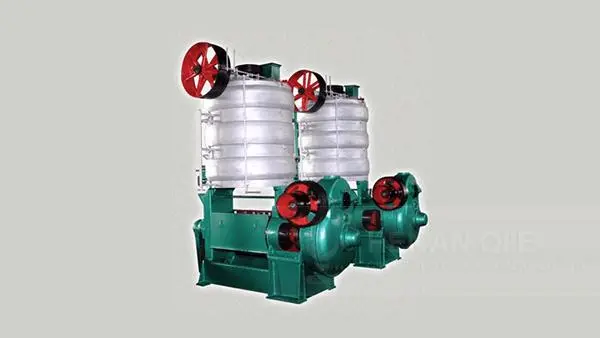
Equipment for mechanical oil extraction from suitable oilseeds, including cold pressing and multifunction oil pressing applications.
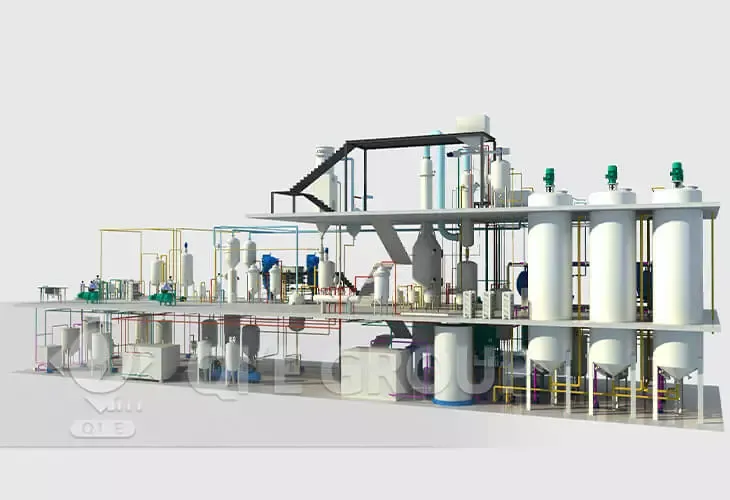
Integrated configurations for processes such as soybean oil, palm oil, palm kernel oil, and other vegetable oil production.
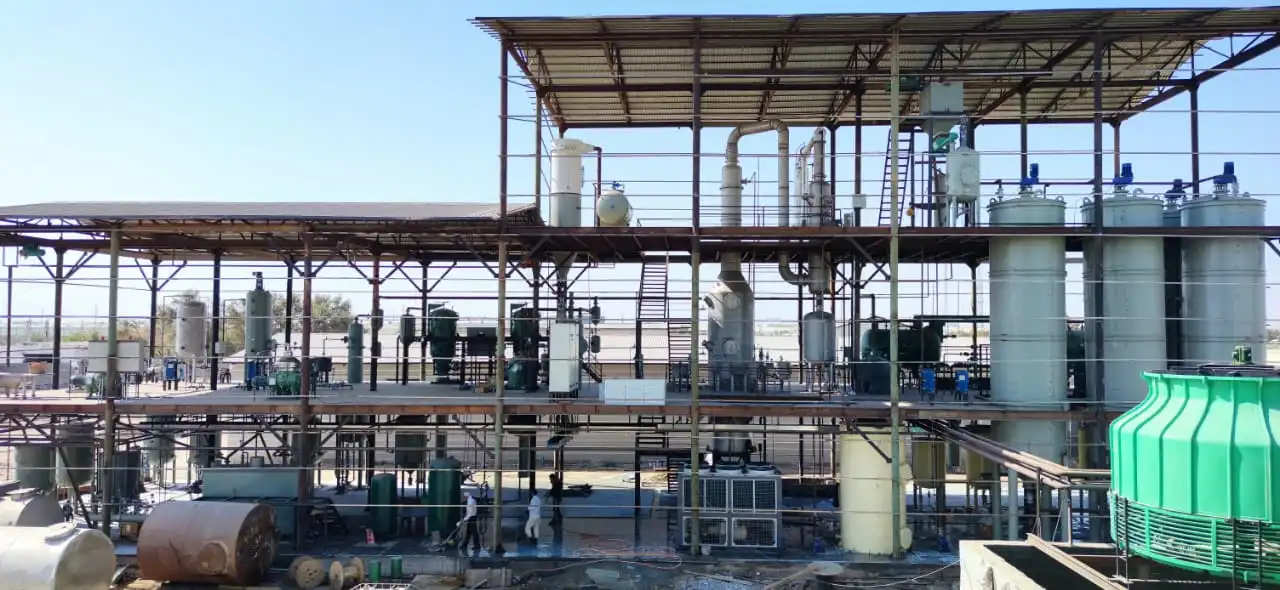
Refining equipment and process arrangements for reducing impurities and improving the appearance, flavor, and storage stability of crude oil.
Support covering project design, equipment selection, installation, commissioning coordination, and technical service.
Soybean oil refining removes or reduces substances that can affect color, taste, odor, stability, and processing performance. The main stages are degumming, neutralization, bleaching, and deodorization. Winterization may be added when the intended application requires improved clarity at lower temperatures.
| Refining stage | Main purpose | Typical process principle |
|---|---|---|
| Degumming | Removal of phospholipids and gums from crude soybean oil. | Water or diluted acid can hydrate phospholipids so that the gum phase can be separated. Enzymatic degumming may also be considered for specific process requirements. |
| Neutralization | Reduction of free fatty acids and related impurities. | An alkaline agent, commonly sodium hydroxide, reacts with free fatty acids to form soapstock, which is then separated from the oil. |
| Bleaching | Reduction of pigments, trace metals, and residual impurities. | Bleaching earth or activated clay adsorbs unwanted compounds. The adsorbent is subsequently removed by filtration. |
| Deodorization | Removal of volatile odor and flavor compounds. | Steam distillation under vacuum removes volatile components and residual free fatty acids while helping limit oxidation and degradation. |
| Optional winterization | Improvement of low-temperature clarity and stability. | The oil is cooled so that waxes and higher-melting components crystallize and can be removed through filtration. |
Qi'e Grain and Oil Machinery Co., Ltd. offers a product range that can be incorporated into projects from individual equipment applications to integrated oil processing lines. Depending on the project scope, customers may consider soybean oil production lines, edible oil refining machines, vegetable oil solvent extraction equipment, cold press oil machines, multifunction oil presses, and automatic oil press machines.
For projects involving palm and palm kernel processing, the company also supplies palm kernel oil production line equipment. The final configuration should be determined from the raw material, process route, capacity target, and quality requirements rather than from a single machine specification.
A well-designed grain and oil processing project begins with a clear understanding of the raw material and ends with a process configuration that supports the intended product quality, operating conditions, and business objectives. Qi'e Grain and Oil Machinery Co., Ltd. can support customers in evaluating oil pressing, production line, and edible oil refining equipment for their specific project requirements.
 soybean oil refining equipment batch refining semi-continuous refining oil refining efficiency edible oil production line
household soybean oil press maintenance oil press troubleshooting guide home oil press care tips soybean oil press daily cleaning oil press filter replacement
small and medium oil mill site selection emerging market oil processing Africa Southeast Asia oil equipment ISO9001 certified oil machinery energy-efficient oil extraction equipment
soybean oil refining process deacidification technology degumming process bleaching methods edible oil processing
small-scale soybean oil extraction high efficiency oil yield fully automated oil extraction process soybean oil press machine process parameter optimization
soybean oil refining equipment batch refining semi-continuous refining oil refining efficiency edible oil production line
household soybean oil press maintenance oil press troubleshooting guide home oil press care tips soybean oil press daily cleaning oil press filter replacement
small and medium oil mill site selection emerging market oil processing Africa Southeast Asia oil equipment ISO9001 certified oil machinery energy-efficient oil extraction equipment
soybean oil refining process deacidification technology degumming process bleaching methods edible oil processing
small-scale soybean oil extraction high efficiency oil yield fully automated oil extraction process soybean oil press machine process parameter optimization




.png?x-oss-process=image/resize,h_100,m_lfit/format,webp)
.png?x-oss-process=image/resize,h_100,m_lfit/format,webp)
.png?x-oss-process=image/resize,h_100,m_lfit/format,webp)



.jpg?x-oss-process=image/resize,m_fill,h_800,w_800/format,webp)

