Oil Processing Project Guidance
Selecting oil processing equipment requires more than comparing individual machines. The right configuration should match the raw material, required capacity, product quality objectives, refining process, automation level, environmental conditions and available technical support.
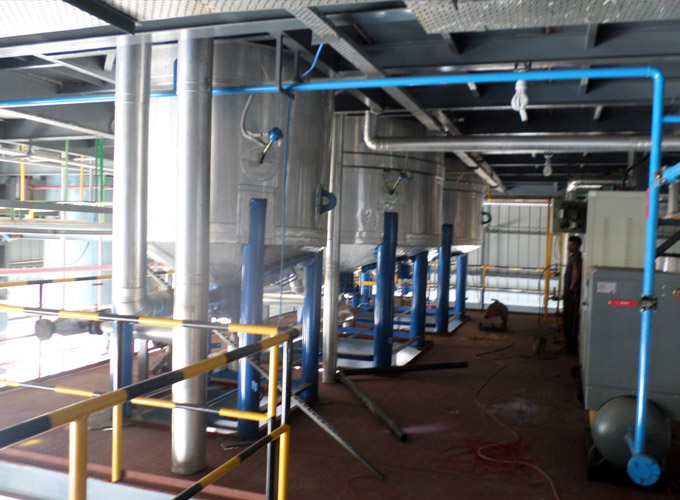
Different oilseeds and crude oils may require different pressing, extraction and refining arrangements. Soybean oil projects, for example, may include oil extraction followed by a series of purification steps designed to remove phospholipids, free fatty acids, pigments, waxes and volatile compounds.
Before selecting equipment, define the intended product and its application. Cooking oil, food-processing oil and oil for other industrial uses may have different requirements for appearance, flavor, stability, storage performance and final quality control. This information provides the basis for selecting an individual edible oil refining machine or a complete production line.
Confirm the type and condition of the oilseed or crude oil, including moisture, impurities and the characteristics that may affect pressing, extraction or refining.
The desired production capacity influences the equipment size, process arrangement, storage requirements and the level of automation required for the project.
The target quality determines whether the process should include degumming, neutralization, bleaching, deodorization, winterization and final filtration.
Available utilities, plant layout, energy efficiency objectives, environmental requirements, labor conditions and future expansion plans should be reviewed together.
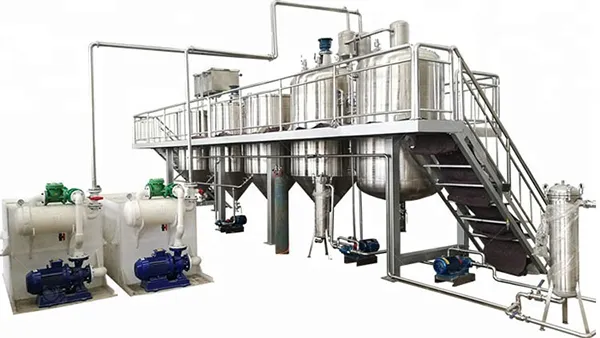
Soybean oil refining converts crude soybean oil into a purified edible oil suitable for consumption and other applications. Each process stage addresses a specific group of impurities and should be considered as part of the overall production-line design.
| Process stage | Main purpose | Selection focus |
|---|---|---|
| Degumming | Removes phospholipids and other gum-forming substances from crude oil. | Process method, separation efficiency and compatibility with the crude oil. |
| Neutralization | Reduces free fatty acids and helps separate soap and related impurities. | Alkali handling, mixing, reaction control and separation equipment. |
| Bleaching | Adsorbs pigments, trace metals and residual impurities to improve oil appearance and quality. | Bleaching earth dosage, vacuum operation, heating and filtration. |
| Deodorization | Removes volatile compounds and residual odor-producing components. | Vacuum system, steam stripping, temperature control and oil protection. |
| Winterization (optional) | Removes waxes and higher-melting components that may cause cloudiness at lower temperatures. | Cooling conditions, crystallization time and filtration performance. |
A refining system should be evaluated as a coordinated process rather than as a collection of unrelated machines. Degumming, neutralization, bleaching, deodorization and optional winterization each influence the following stage. Proper integration helps the project maintain a logical material flow, support stable operation and meet the intended product requirements.
Qi'e Grain and Oil Machinery Co., Ltd. develops, manufactures, supplies and supports oil pressing equipment, oil production line equipment and edible oil refining equipment. Its project support can cover equipment selection, process configuration, installation guidance and technical service for customers in Asia, Africa, South America and other markets.
For a soybean oil refining project, provide the raw material information, desired capacity, required refining stages and site conditions so the equipment configuration can be assessed according to the actual project objectives.
 grain and oil machinery oil pressing machinery oil production equipment edible oil refining Qi'e Grain and Oil Machinery Co., Ltd.
edible oil processing line oilseed pretreatment oil pressing vegetable oil refining Qi'e Grain and Oil Machinery Co., Ltd.
integrated grain and oil machinery solutions oil pressing equipment edible oil production line oil refining equipment Qi'e Grain and Oil Machinery Co., Ltd.
efficient and eco-friendly procurement preferences grain and oil processing energy saving Qi'e Grain and Oil Machinery Co., Ltd.
soybean oil refining process edible oil refining equipment oil refining technology Qi'e Grain and Oil Machinery Co., Ltd. vegetable oil refining process
grain and oil machinery oil pressing machinery oil production equipment edible oil refining Qi'e Grain and Oil Machinery Co., Ltd.
edible oil processing line oilseed pretreatment oil pressing vegetable oil refining Qi'e Grain and Oil Machinery Co., Ltd.
integrated grain and oil machinery solutions oil pressing equipment edible oil production line oil refining equipment Qi'e Grain and Oil Machinery Co., Ltd.
efficient and eco-friendly procurement preferences grain and oil processing energy saving Qi'e Grain and Oil Machinery Co., Ltd.
soybean oil refining process edible oil refining equipment oil refining technology Qi'e Grain and Oil Machinery Co., Ltd. vegetable oil refining process



.png?x-oss-process=image/resize,h_100,m_lfit/format,webp)
.png?x-oss-process=image/resize,h_100,m_lfit/format,webp)
.png?x-oss-process=image/resize,h_100,m_lfit/format,webp)