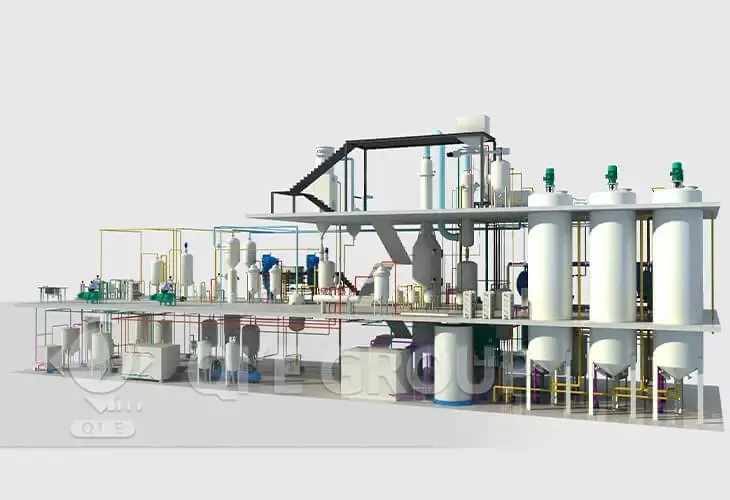
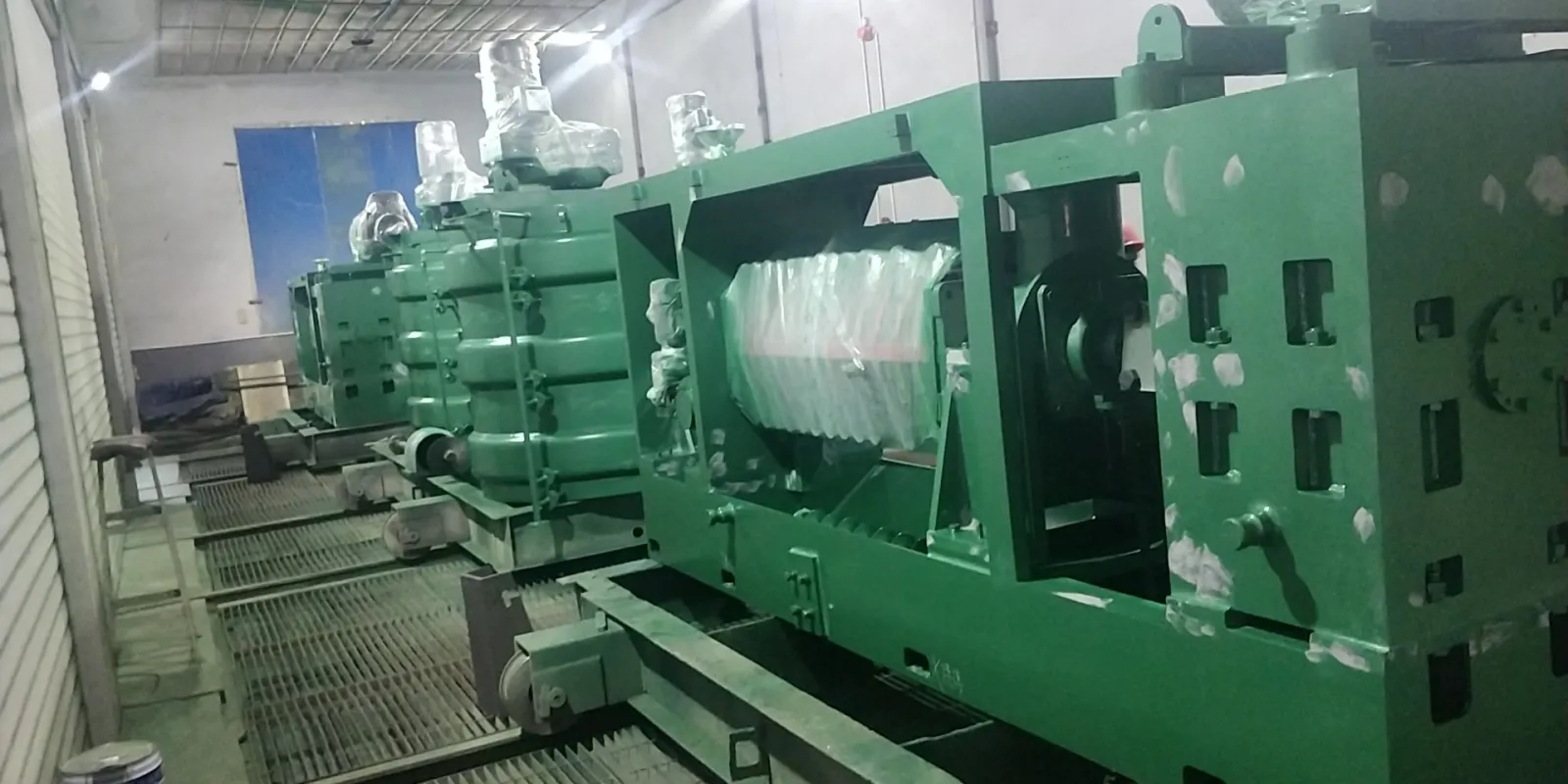
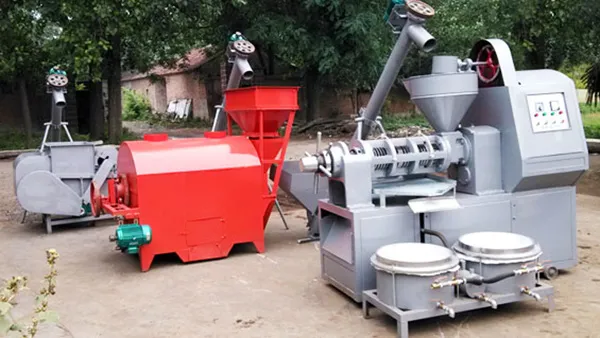
Qi'e Grain and Oil Machinery Co., Ltd. provides this practical reference for understanding the agents and additives used in soybean oil refining. Their selection should be coordinated with the crude oil condition, target refined oil quality, process configuration, and equipment capability. The objective is not to use more chemicals, but to achieve effective impurity removal with controlled process conditions and consistent product quality.
Crude soybean oil may contain phospholipids, free fatty acids, pigments, trace metals, waxes, moisture, oxidation products, and volatile compounds. These impurities can affect flavor, color, transparency, storage stability, and suitability for food or industrial applications.
In a complete soybean oil refining process, properly selected agents and additives support the main stages of degumming, neutralization, bleaching, deodorization, and optional winterization. The required materials and operating conditions vary according to crude oil quality and the refined oil specification.
| Refining stage | Common agents or media | Main process purpose |
|---|---|---|
| Degumming | Water, dilute acid, or selected enzymes | Hydrate or break down phospholipids so gums can be separated from the oil. |
| Neutralization | Caustic soda, commonly sodium hydroxide | React with free fatty acids to form soapstock and reduce oil acidity. |
| Bleaching | Activated bleaching earth or other adsorbent media | Adsorb pigments, trace metals, residual phosphatides, and other color-forming impurities. |
| Deodorization | Stripping steam and vacuum conditions | Remove volatile odor and flavor compounds as well as remaining free fatty acids. |
| Winterization | Controlled cooling and filtration media | Separate waxes and high-melting-point components to improve low-temperature clarity. |
Degumming is the first major purification step for crude soybean oil. Phospholipids, often referred to as gums, can increase oil instability and interfere with later refining operations. Water or dilute acid may be used to hydrate phospholipids, allowing them to form a separate phase that can be removed by centrifugation or another suitable separation method.
Enzymatic degumming uses selected enzymes to modify phospholipids and improve their separation behavior. This approach may be considered when the process requires more effective phosphorus reduction or improved oil recovery, but the choice should be based on crude oil analysis, enzyme compatibility, reaction conditions, and the downstream refining design.
Neutralization, also called alkali refining, uses caustic soda—commonly sodium hydroxide—to react with free fatty acids in degummed soybean oil. The reaction forms soap, which can be separated from the oil through centrifugation or filtration. This stage can also assist in removing some residual phosphatides, pigments, and trace metals.
The concentration and quantity of caustic soda should be determined according to the oil’s acid value, free fatty acid content, temperature, mixing conditions, and desired loss of neutral oil. Excess alkali may increase refining loss, while insufficient alkali may leave unacceptable acidity in the oil.
Bleaching is an adsorption process rather than a simple color-changing treatment. Activated bleaching earth or similar adsorbent media can capture chlorophyll, carotenoids, trace metals, residual phosphatides, and other compounds that influence the color and stability of soybean oil.
The oil is typically contacted with the adsorbent under controlled temperature and vacuum conditions. After adsorption, the spent bleaching earth is removed by filtration. Adsorbent performance depends on its activation characteristics, particle properties, dosage, contact time, oil temperature, vacuum level, and the impurity profile of the incoming oil.
Deodorization removes volatile compounds that may cause undesirable odors or flavors. In this stage, stripping steam passes through hot oil under vacuum. The steam carries away volatile compounds and remaining free fatty acids, helping produce oil with a more neutral taste and odor.
Deodorization performance depends on temperature, vacuum level, steam rate, residence time, feed quality, and equipment design. The process must be controlled carefully to balance odor removal with the protection of oil quality. Steam quality and vacuum stability are therefore important process considerations, even though no conventional chemical additive is required for the stripping action itself.
Practical point: deodorization steam should be treated as a process medium whose flow, cleanliness, and distribution influence stripping efficiency and final refined oil characteristics.
Winterization is an optional refining stage used when the application requires improved clarity at lower temperatures. The oil is cooled under controlled conditions so that waxes and other high-melting-point components crystallize. These solids are then removed through filtration.
Unlike degumming or neutralization, winterization generally relies on controlled cooling, crystallization, and solid-liquid separation rather than a chemical additive. The cooling profile, holding time, crystal formation, and filter performance all influence whether the finished oil remains clear during cool storage or cold-use applications.
Agents and process media should be selected as part of an integrated soybean oil refining system. A suitable combination can support the reduction of phospholipids, free fatty acids, color bodies, volatile compounds, and waxes while helping maintain consistent oil characteristics.
| Quality concern | Relevant refining response |
|---|---|
| High phospholipid content | Review water, acid, or enzymatic degumming conditions and gum separation. |
| High free fatty acid content | Adjust neutralization or deodorization conditions according to the refining route. |
| Dark color or trace metals | Evaluate activated bleaching earth, adsorption conditions, and filtration performance. |
| Unwanted odor or flavor | Review deodorization temperature, vacuum, steam distribution, and residence time. |
| Cloudiness at low temperature | Consider winterization, controlled crystallization, and suitable filtration. |
For soybean oil refining projects, additive selection should be considered together with process flow, equipment configuration, capacity, raw material characteristics, and quality objectives. Qi'e Grain and Oil Machinery Co., Ltd. focuses on oil pressing equipment, oil production line equipment, and edible oil refining equipment, supporting customers with project-oriented technical communication and process planning.
A well-designed refining line combines suitable agents, controlled operating conditions, reliable separation, filtration, heating, vacuum, and final quality checks. This integrated approach helps processors make informed decisions when developing or upgrading a soybean oil refining plant.
 Qi'e Grain and Oil Machinery Co., Ltd. grain and oil processing equipment oil production line edible oil refining equipment grain and oil processing solutions
project delivery installation and commissioning solution design grain and oil processing case Qi'e Grain and Oil Machinery Co., Ltd.
grain and oil machinery oil pressing machinery oil production equipment edible oil refining Qi'e Grain and Oil Machinery Co., Ltd.
grain and oil processing overall solution oil press equipment edible oil production line oil refining equipment grain and oil machinery project service Qi'e Grain and Oil Machinery Co., Ltd.
grain and oil machinery complete solution production line oil pressing equipment refining equipment Qi'e Grain and Oil Machinery Co., Ltd.