
Selecting the right soya oil refining agents is essential for achieving consistent oil quality and stable process performance. Qi'e Grain and Oil Machinery Co., Ltd. provides this practical process-matching guide for soybean oil refining technicians, plant managers, and quality control teams. It explains how degumming agents, enzymes, caustic soda, bleaching earth, and deodorization media work with crude soybean oil quality and refining equipment.
Crude soybean oil may contain phospholipids, free fatty acids, pigments, trace metals, waxes, moisture, and volatile compounds. The quantity and form of these impurities can vary according to soybean quality, extraction conditions, storage history, and upstream processing. For this reason, refining agents should not be selected independently from the oil analysis or plant configuration.
A practical selection approach considers crude oil characteristics, target quality values, equipment conditions, separation capacity, operating control, and applicable food-safety requirements. The objective is to remove unwanted components while protecting oil yield, flavour, colour, oxidation stability, and low-temperature clarity.
| Refining stage | Common agent or medium | Main process purpose | Key control considerations |
|---|---|---|---|
| Degumming | Water, dilute acid, or enzymes | Hydrate or transform phospholipids so gums can be separated | Phosphorus level, gum type, moisture, mixing, temperature, and separation efficiency |
| Neutralization | Sodium hydroxide or another approved alkali | Convert free fatty acids into soapstock for removal | Acidity, alkali concentration, dosage, reaction conditions, and soap separation |
| Bleaching | Bleaching earth or activated clay | Adsorb pigments, trace metals, and residual impurities | Oil colour, adsorbent activity, dosage, contact time, vacuum, and filtration |
| Deodorization | Steam under vacuum | Strip volatile odour compounds and remaining free fatty acids | Temperature, vacuum, steam distribution, residence time, and protection against oxidation |
| Winterization | Cooling and filtration | Remove waxes or high-melting-point compounds when low-temperature clarity is required | Cooling profile, crystallization, holding time, and filter performance |
Degumming removes phospholipids, commonly referred to as gums, from crude soybean oil. Water or dilute acid can hydrate phospholipids and promote phase separation, while enzymatic degumming can modify phospholipids to support their removal.
The suitable method depends on the form of the phospholipids, the required phosphorus level, the oil’s moisture and acidity, and the available centrifugation or filtration capacity. Consistent mixing and controlled reaction conditions are important for producing a stable feed for the following refining stages.
In alkali refining, sodium hydroxide reacts with free fatty acids to form soap. The soap phase can then be separated from the oil by suitable separation equipment. This stage may also help remove part of the phosphatides, pigments, and trace metals.
Alkali dosage should be matched to the measured acidity and process requirements. Excessive or insufficient dosing may affect oil loss, soap separation, and downstream bleaching performance. Plant operators should therefore use oil analysis and controlled dosing rather than relying on a fixed amount for every batch or feedstock.
Bleaching earth or activated clay adsorbs colour pigments, residual phosphatides, and trace metals. The oil is contacted with the adsorbent and then filtered to remove the spent earth.
Selection should consider the initial colour, pigment composition, residual soap, metal content, oil temperature, vacuum conditions, and desired final colour. Adequate filtration is equally important because residual bleaching earth can affect appearance, stability, and subsequent deodorization.
Deodorization uses steam distillation under vacuum to remove volatile compounds, unpleasant odours, flavours, and remaining free fatty acids. The result is a more neutral-tasting and neutral-smelling refined soybean oil.
The deodorization profile must be coordinated with oil quality and equipment capability. Temperature, vacuum level, steam distribution, and residence time influence the removal of volatile compounds as well as the protection of the oil from unnecessary oxidation or thermal degradation.
Winterization may be included when the refined soybean oil must remain clear during cool storage or cold-use applications. Controlled cooling allows waxes and other high-melting-point compounds to crystallize before filtration. This stage should be considered according to the product specification and low-temperature clarity requirements.
Refining agents should be evaluated as part of the complete process rather than as isolated consumables. A practical quality control program may review:
There is no universal dosage or single refining-agent combination suitable for every soybean oil plant. The correct selection should be confirmed through raw-material testing, process trials, equipment review, and finished-oil analysis. Local food regulations and the specifications of the intended market should also be considered before production.
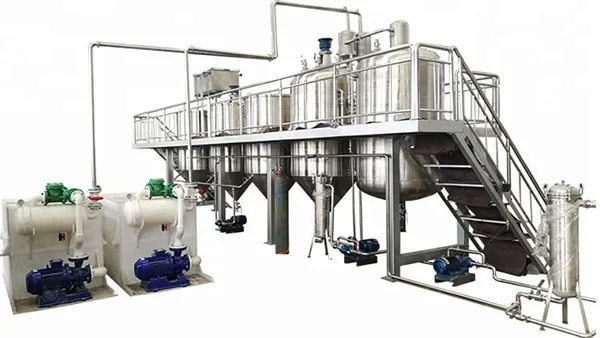
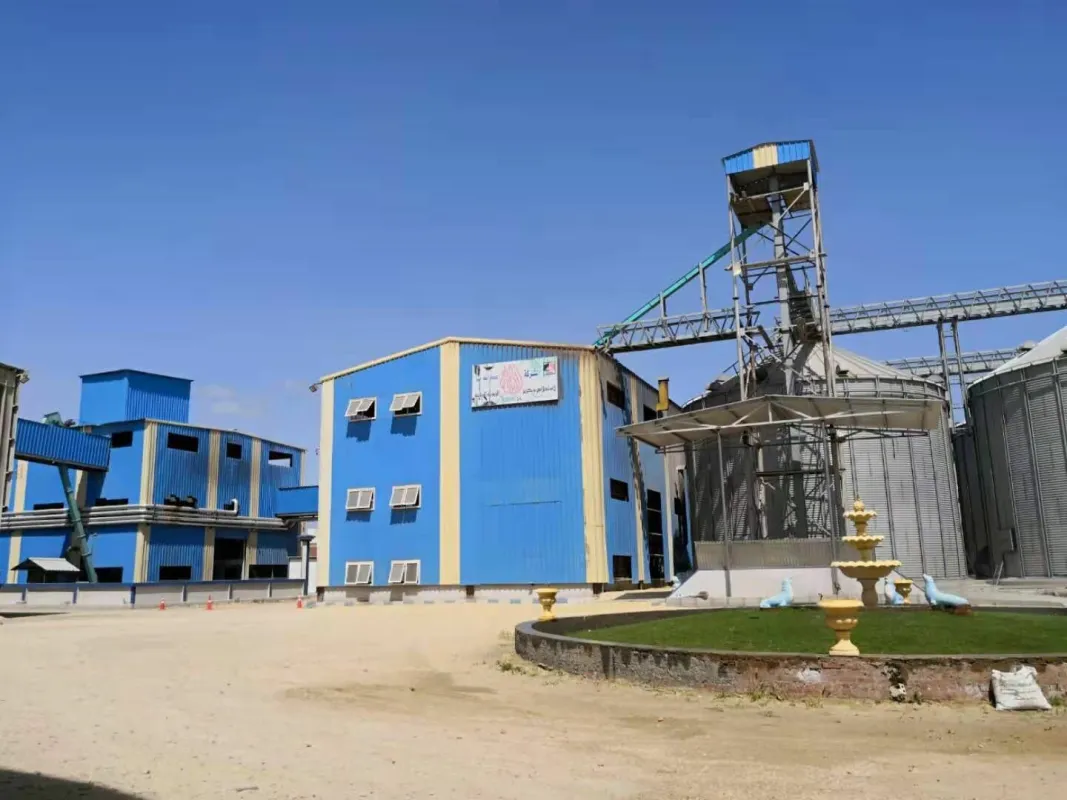
Qi'e Grain and Oil Machinery Co., Ltd. develops, manufactures, supplies, and services oil pressing equipment, oil production line equipment, and edible oil refining equipment. Its technical approach connects refining-agent selection with process design, installation requirements, operating conditions, and service support.
For soybean oil processors in Asia, Africa, South America, and other markets, this process-matching approach helps create a clearer basis for evaluating degumming, neutralization, bleaching, deodorization, winterization, filtration, and packaging requirements. The focus is on practical equipment coordination, controlled refining, and quality-oriented plant operation.
 grain and oil machinery equipment oil pressing production line edible oil refining equipment oil processing solution Qi'e Grain and Oil Machinery Co., Ltd.
grain and oil machinery complete solution production line oil pressing equipment refining equipment Qi'e Grain and Oil Machinery Co., Ltd.
edible oil production line equipment oil pressing equipment oil refining equipment oilseed processing Qi'e Grain and Oil Machinery Co., Ltd.
grain and oil machinery equipment oil pressing production line edible oil refining equipment oil processing solution Qi'e Grain and Oil Machinery Co., Ltd.
grain and oil machinery oil pressing machinery oil production equipment edible oil refining Qi'e Grain and Oil Machinery Co., Ltd.
grain and oil machinery equipment oil pressing production line edible oil refining equipment oil processing solution Qi'e Grain and Oil Machinery Co., Ltd.
grain and oil machinery complete solution production line oil pressing equipment refining equipment Qi'e Grain and Oil Machinery Co., Ltd.
edible oil production line equipment oil pressing equipment oil refining equipment oilseed processing Qi'e Grain and Oil Machinery Co., Ltd.
grain and oil machinery equipment oil pressing production line edible oil refining equipment oil processing solution Qi'e Grain and Oil Machinery Co., Ltd.
grain and oil machinery oil pressing machinery oil production equipment edible oil refining Qi'e Grain and Oil Machinery Co., Ltd.




.png?x-oss-process=image/resize,h_100,m_lfit/format,webp)
.png?x-oss-process=image/resize,h_100,m_lfit/format,webp)
.png?x-oss-process=image/resize,h_100,m_lfit/format,webp)

.jpg?x-oss-process=image/resize,h_800,m_lfit/format,webp)


.jpg?x-oss-process=image/resize,m_fill,h_800,w_800/format,webp)

