.png?x-oss-process=image/resize,h_100,m_lfit/format,webp)
.png?x-oss-process=image/resize,h_100,m_lfit/format,webp)
.png?x-oss-process=image/resize,h_100,m_lfit/format,webp)
1. Cleaning and Preparation
Vibrating screens, de-stoners, magnetic separators, and related cleaning equipment remove dirt, stones, metal, and other foreign materials before further processing.
Qi'e Grain and Oil Machinery Co., Ltd. provides soybean oil processing equipment and engineering services for businesses planning, upgrading, or expanding soybean oil production projects. The selection of an industrial soybean oil extraction system should consider more than the equipment itself. Capacity, soybean characteristics, plant conditions, energy use, solvent recovery, refining integration, maintenance, safety, and local compliance requirements all influence the long-term suitability of a production line.
This guide outlines the main soybean oil processing equipment trends and practical considerations for selecting a solvent extraction solution. It is intended to support project owners, investors, plant operators, and technical teams evaluating industrial soybean oil production.
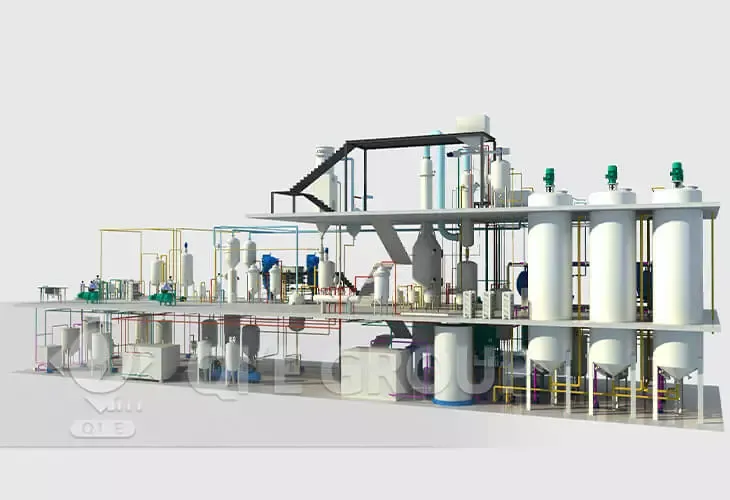
A complete soybean oil production line normally combines raw material preparation, oil extraction, crude oil handling, and—when required—edible oil refining. The equipment configuration depends on the intended capacity, available utilities, desired oil quality, processing method, and use of soybean meal as a by-product.
Vibrating screens, de-stoners, magnetic separators, and related cleaning equipment remove dirt, stones, metal, and other foreign materials before further processing.
Crushing breaks the soybean structure, while flaking increases the available surface area and prepares the material for efficient oil extraction.
Controlled heating and conditioning soften soybean flakes, support oil release, and help prepare the material for pressing or solvent extraction.
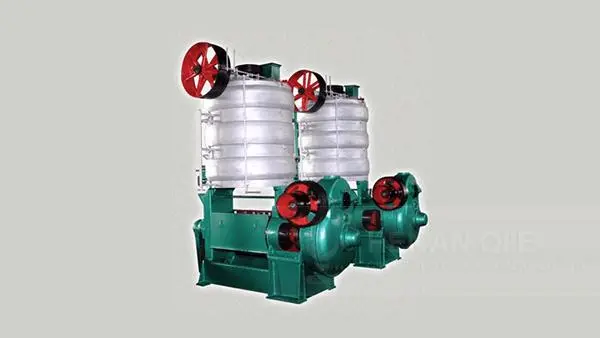
Depending on the project, oil may be recovered through mechanical pressing, solvent extraction, or a combination of both methods.
In solvent-based systems, the oil-solvent mixture is separated and the solvent is recovered for reuse. Desolventized soybean meal can be processed for animal feed applications.
Crude oil filtration removes suspended particles. Further refining may include degumming, neutralization, bleaching, and deodorization according to the intended product requirements.
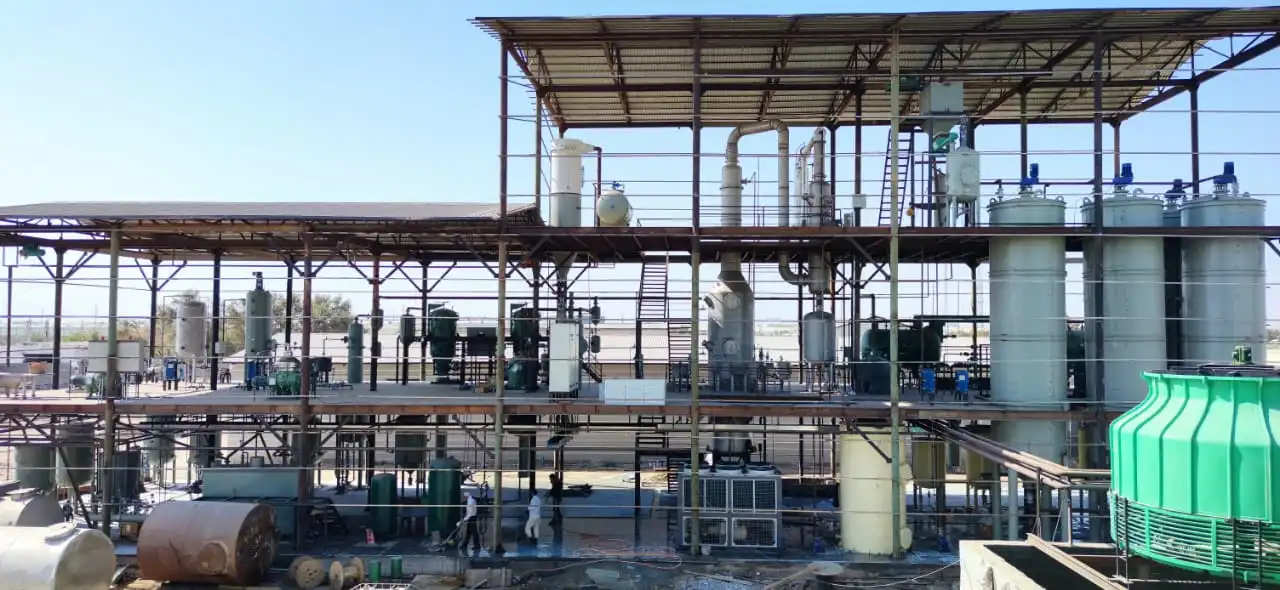
The most appropriate soybean oil extraction technology depends on the project scale, oil recovery objectives, available investment, operating conditions, and downstream requirements. Mechanical screw presses are commonly considered for small- and medium-scale operations because of their relatively straightforward process structure. Industrial solvent extraction is generally selected when high oil recovery and continuous large-scale production are important.
| Consideration | Mechanical Pressing | Solvent Extraction |
|---|---|---|
| Typical application | Small- to medium-scale soybean oil processing | Large-scale industrial soybean oil production |
| Core equipment | Screw press and crude oil filtration equipment | Extractor, solvent evaporation, recovery, and meal desolventizing equipment |
| Project focus | Simple operation and moderate production requirements | Oil recovery, continuous operation, process integration, and environmental control |
| Additional planning needs | Press cake handling and possible further processing | Solvent management, safety systems, recovery performance, and regulatory compliance |
Solvent recovery is a central consideration in an industrial soybean oil extraction plant. A properly planned system separates solvent from the extracted oil and soybean meal, supports reuse within the process, and helps control solvent losses. Equipment selection should therefore consider recovery equipment, sealing, ventilation, monitoring, heat integration, and safe operating procedures together.
Environmental and safety requirements vary by project location. Before finalizing a line, the project team should verify applicable standards and permitting requirements for emissions, wastewater, noise, fire protection, hazardous materials, and worker protection.
Projects increasingly evaluate preparation, extraction, meal treatment, filtration, and refining as one coordinated system to improve process continuity and management.
Automation can support stable process control, reduce manual intervention, and provide operators with clearer information for production and maintenance decisions.
Soybean meal and other process by-products may have commercial value. Their handling and quality requirements should be considered when designing the complete project.
Modular equipment selection can help businesses align current production needs with possible future expansion, subject to site conditions and technical feasibility.
Qi'e Grain and Oil Machinery Co., Ltd. develops and supplies oil pressing equipment, soybean oil production line equipment, solvent extraction systems, filtration equipment, and edible oil refining machinery. Its project approach covers equipment selection, process design, installation guidance, commissioning support, and technical service according to the requirements of each application.
For decision-makers comparing soybean oil processing equipment suppliers, the most useful starting point is a clear project brief covering target capacity, soybean variety and quality, desired extraction method, final oil specification, soybean meal requirements, available utilities, site conditions, and local compliance expectations. Based on this information, the soybean oil production line can be configured with a more practical balance between investment, operating requirements, process control, and future development.
Related solution: Explore Qi'e's soybean oil production line for an integrated approach to soybean preparation, oil extraction, filtration, and refining.
 oil processing project process equipment engineering services production line installation equipment commissioning training Qi'e Grain and Oil Machinery Co., Ltd.
edible oil processing line oilseed pretreatment oil pressing vegetable oil refining Qi'e Grain and Oil Machinery Co., Ltd.
soybean oil solvent extraction large capacity oil extraction oil yield improvement energy saving in oil production solvent recovery optimization
grain and oil machinery complete solution production line oil pressing equipment refining equipment Qi'e Grain and Oil Machinery Co., Ltd.
high-capacity soybean oil solvent extraction equipment Asian African oil mill equipment solvent extraction equipment selection oil extraction technical parameters equipment ROI analysis
oil processing project process equipment engineering services production line installation equipment commissioning training Qi'e Grain and Oil Machinery Co., Ltd.
edible oil processing line oilseed pretreatment oil pressing vegetable oil refining Qi'e Grain and Oil Machinery Co., Ltd.
soybean oil solvent extraction large capacity oil extraction oil yield improvement energy saving in oil production solvent recovery optimization
grain and oil machinery complete solution production line oil pressing equipment refining equipment Qi'e Grain and Oil Machinery Co., Ltd.
high-capacity soybean oil solvent extraction equipment Asian African oil mill equipment solvent extraction equipment selection oil extraction technical parameters equipment ROI analysis



.jpg?x-oss-process=image/resize,h_800,m_lfit/format,webp)
.jpg?x-oss-process=image/resize,h_800,m_lfit/format,webp)