
Selecting the right refining agents is an important part of producing stable, clear and high-quality soybean oil.
In a soybean oil refining process, water, dilute acid, enzymes, sodium hydroxide, bleaching earth, steam and filtration media each serve a different purpose. The appropriate choice depends on the impurity profile of the crude oil, available refining equipment, product quality targets and environmental requirements. Qi'e Grain and Oil Machinery Co., Ltd. combines oil refining equipment expertise with process knowledge to help customers evaluate these factors in a practical and structured way.
A refining aid should not be selected in isolation. Before choosing an agent or auxiliary medium, the crude soybean oil and the intended process should be assessed against several key conditions:
The following overview connects common soybean oil refining agents and process aids with their main functions. Actual dosage, operating conditions and equipment configuration should be verified through trials using the specific crude oil.
| Refining stage | Common agent or aid | Main removal target | Key quality focus |
|---|---|---|---|
| Degumming | Water, dilute acid or enzymes | Phospholipids and gums | Phosphorus level, separation and oil stability |
| Neutralization | Sodium hydroxide or other approved alkali | Free fatty acids and associated impurities | Acid value, soap separation and oil loss |
| Bleaching | Bleaching earth or activated clay | Pigments, trace metals and residual phosphatides | Color, filtration performance and oxidation control |
| Deodorization | Steam under vacuum | Volatile compounds, odors and remaining FFAs | Flavor, odor, thermal control and stability |
| Winterization | Cooling and filtration media | Waxes and high-melting-point compounds | Low-temperature clarity and storage appearance |
Degumming prepares crude soybean oil for the following refining steps by removing phospholipids and gums. Water or dilute acid can hydrate phospholipids so that they form a separate phase, which can then be removed by centrifugation or another suitable separation method.
Enzymatic degumming may also be considered when the process objective requires improved phospholipid conversion or easier separation. The choice should reflect the type of phospholipids present, the desired phosphorus level and the separation capability of the plant. A practical trial is important because the same degumming method may perform differently with oils from different sources.
Neutralization, also called alkali refining, uses an alkali such as sodium hydroxide to react with free fatty acids and form soap. The soap phase can be separated from the oil through centrifugation or filtration. This stage may also assist in removing certain phosphatides, pigments and trace metals.
The amount and strength of alkali should be matched to the oil’s acidity and process conditions. Excessive treatment can increase soap formation and oil loss, while insufficient treatment may leave an undesirable acid value or affect subsequent bleaching and deodorization. For this reason, neutralization should be evaluated together with separation efficiency and the target refined soybean oil quality.
Bleaching earth or activated clay adsorbs color pigments such as chlorophyll and carotenoids. It can also help reduce trace metals and residual phosphatides. The treated oil is normally filtered to remove the spent earth and the impurities it has captured.
Selection should consider adsorption performance, filtration behavior and the required final color. Bleaching is commonly conducted under vacuum and controlled heating to limit oxidation. The bleaching earth should therefore be selected together with the plant’s mixing, vacuum and filtration capabilities rather than by color-removal performance alone.
Deodorization uses high-temperature steam distillation under vacuum to remove volatile compounds, undesirable odors, flavors and remaining free fatty acids. Steam quality, vacuum performance, residence time and temperature control all influence the result.
The stated deodorization temperature may typically range from 180°C to 250°C, but the suitable operating point depends on the crude oil, quality target and equipment design. Careful control is needed to reduce oxidation and avoid unnecessary thermal impact on the oil. Deodorization should therefore be planned as an integrated part of the soybean oil refining process, not as an isolated treatment.
Winterization may be used when waxes or other high-melting-point compounds could make soybean oil cloudy during storage at low temperatures. The oil is cooled to encourage crystallization, and the solid particles are then removed by filtration. This step is especially relevant when the intended application requires clear oil under cool storage or serving conditions.
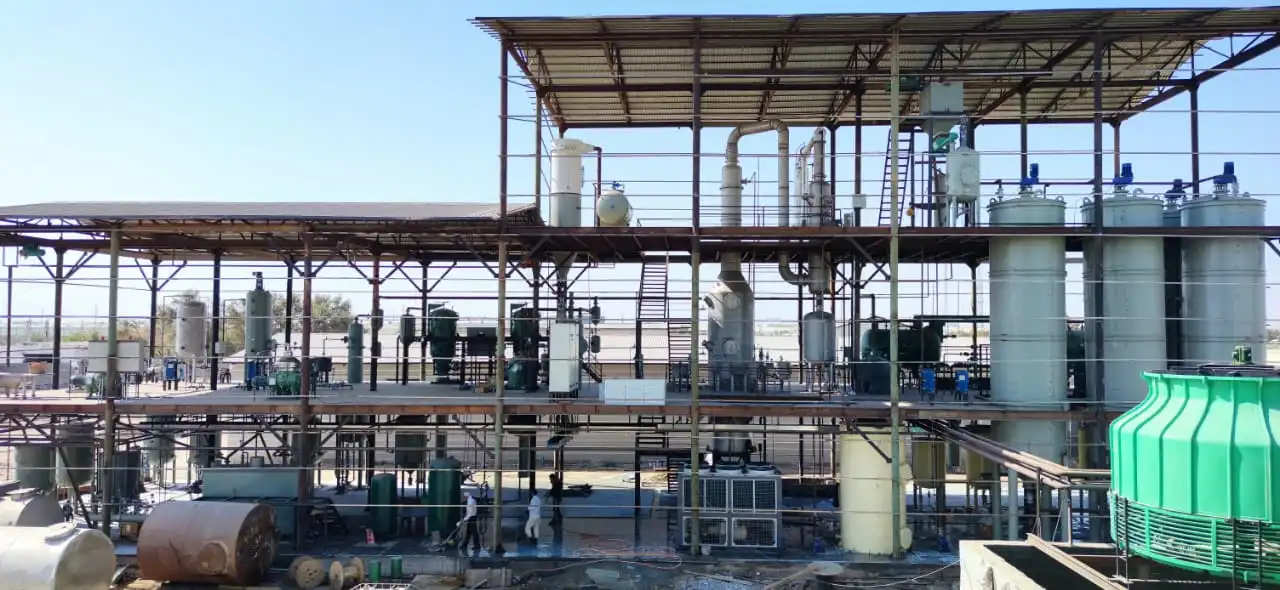
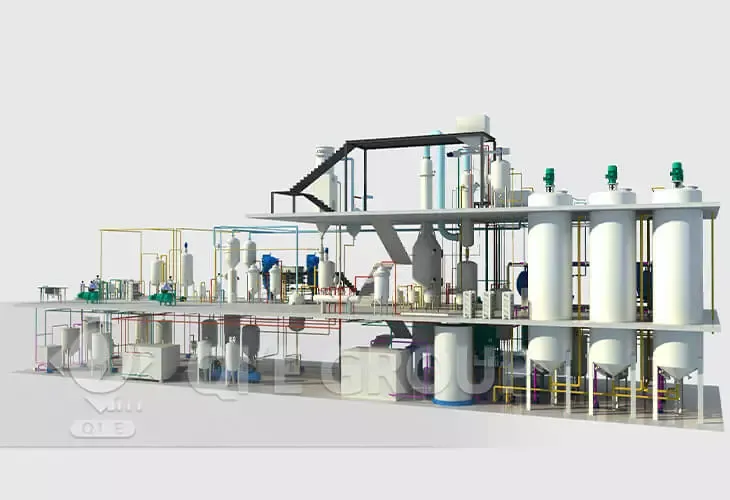
A suitable refining agent can only deliver consistent results when the process equipment provides the required contact, temperature, vacuum, residence time and separation conditions. Degumming, alkali neutralization, bleaching, deodorization, optional winterization and final filtration each place different demands on the plant.
Qi'e Grain and Oil Machinery Co., Ltd. focuses on oil pressing equipment, oil production line equipment and edible oil refining equipment. For soybean oil projects, the company can support customers with process-oriented equipment planning, line configuration, installation guidance and technical service. Agent selection should ultimately be confirmed through testing based on the actual crude oil, equipment conditions, product standards and environmental requirements.
A well-matched soybean oil refining process helps convert crude oil into a purified product suitable for food and industrial applications. By connecting refining aids with impurity targets, separation requirements and measurable quality indicators, processors can make more reliable decisions for their production lines and long-term operation.
 soybean oil refining process edible oil refining equipment oil refining technology Qi'e Grain and Oil Machinery Co., Ltd. vegetable oil refining process
Qi'e Grain and Oil Machinery Co., Ltd. grain and oil processing equipment oil pressing equipment edible oil production line edible oil refining equipment
grain and oil machinery equipment oil pressing production line edible oil refining equipment oil processing solution Qi'e Grain and Oil Machinery Co., Ltd.
high-capacity soybean oil solvent extraction equipment Asian African oil mill equipment solvent extraction equipment selection oil extraction technical parameters equipment ROI analysis
grain and oil machinery oil pressing machinery oil production equipment edible oil refining Qi'e Grain and Oil Machinery Co., Ltd.
soybean oil refining process edible oil refining equipment oil refining technology Qi'e Grain and Oil Machinery Co., Ltd. vegetable oil refining process
Qi'e Grain and Oil Machinery Co., Ltd. grain and oil processing equipment oil pressing equipment edible oil production line edible oil refining equipment
grain and oil machinery equipment oil pressing production line edible oil refining equipment oil processing solution Qi'e Grain and Oil Machinery Co., Ltd.
high-capacity soybean oil solvent extraction equipment Asian African oil mill equipment solvent extraction equipment selection oil extraction technical parameters equipment ROI analysis
grain and oil machinery oil pressing machinery oil production equipment edible oil refining Qi'e Grain and Oil Machinery Co., Ltd.



.png?x-oss-process=image/resize,h_100,m_lfit/format,webp)
.png?x-oss-process=image/resize,h_100,m_lfit/format,webp)
.png?x-oss-process=image/resize,h_100,m_lfit/format,webp)


.jpg?x-oss-process=image/resize,m_fill,h_800,w_800/format,webp)

