Soybean Oil Processing Evaluation
Soybean oil solvent extraction is not evaluated by extraction equipment alone. A viable project must connect raw material preparation, oil recovery, solvent management, product quality, by-product utilization, safety, environmental requirements, and market conditions.
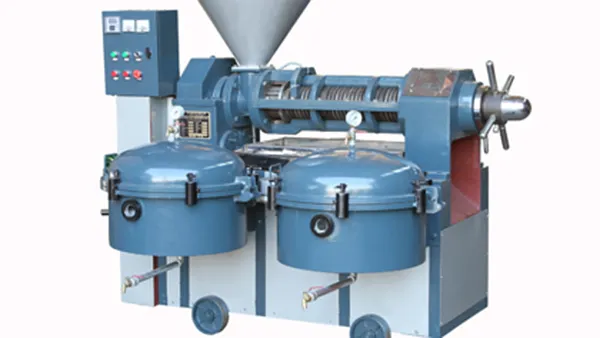
For an industrial soybean oil production project, the process route should be matched with the scale of operation, soybean characteristics, target oil quality, available utilities, labor conditions, and local compliance requirements. Mechanical pressing may suit small- and medium-scale production, while solvent extraction is commonly considered for larger operations that require higher oil recovery from prepared flakes or press cake.
Qi'e Grain and Oil Machinery Co., Ltd. helps oil processing companies assess these factors as an integrated system. The objective is to identify an equipment configuration that is technically compatible with the raw material and commercially aligned with the intended product and by-product channels.
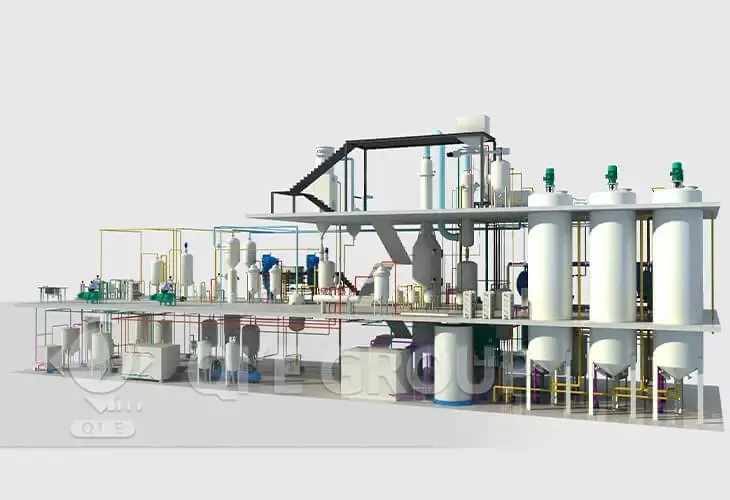
A complete soybean oil extraction system generally combines preparation, extraction, solvent recovery, crude oil handling, and meal treatment. Actual equipment selection and operating conditions should be confirmed through raw material testing and project-specific engineering.
Vibrating screens, de-stoners, magnetic separators, and related preparation equipment can remove foreign materials before further processing.
Crushing and flaking help expose the oil cells, while controlled conditioning can improve the suitability of the flakes for extraction.
Prepared flakes or residual cake are contacted with a solvent to dissolve the oil. The resulting oil-solvent mixture and meal are then handled separately.
Solvent recovery supports process control and reuse, while desolventized soybean meal can be further processed for suitable animal-feed applications.
Filtration removes suspended particles before refining. Depending on the required quality, refining may include degumming, neutralization, bleaching, and deodorization.
| Evaluation factor | Mechanical pressing | Solvent extraction |
|---|---|---|
| Typical application | Small- to medium-scale processing | Large-scale industrial production |
| Main operating principle | Mechanical force from screw pressing | Dissolving oil from prepared flakes or cake with solvent |
| Project considerations | Straightforward operation and moderate oil recovery | Higher system complexity, solvent management, and stricter safety requirements |
| By-product route | Soybean cake can be processed or marketed | Desolventized soybean meal can support feed-related utilization |
The appropriate method depends on capacity, raw material condition, target recovery, investment plan, utilities, operating expertise, and applicable safety and environmental standards.
A soybean oil processing line may be assessed for compatibility with other oilseeds, such as sunflower seed, canola, or peanuts. However, compatibility should not be assumed solely because the crops are oilseeds. Differences in moisture, oil content, kernel structure, impurities, hulls, and processing behavior can affect preparation, extraction, filtration, and refining conditions.
Project returns are influenced not only by crude soybean oil output. Soybean meal, lecithin, and other process streams may contribute to the overall business model when they meet applicable quality requirements and have reliable market channels.
After suitable desolventizing and processing, soybean meal may be directed toward animal-feed applications. Its value depends on quality, local regulations, and buyer requirements.
Lecithin recovery can be considered within the degumming and refining strategy where the raw material, product specification, and commercial demand support it.
Solvent extraction requires disciplined process design and operation because solvent handling introduces specific requirements for equipment layout, vapor control, fire and explosion protection, ventilation, monitoring, maintenance, and operator training. Environmental controls and local compliance obligations should be incorporated at the planning stage rather than treated as later additions.
Qi'e Grain and Oil Machinery Co., Ltd. provides oil processing equipment and integrated support for companies developing soybean oil and multi-oilseed processing projects. Its scope includes oil pressing equipment, oil production line equipment, oil refining equipment, project design, installation support, and technical service.
For a soybean oil solvent extraction project, the most reliable equipment decision is based on actual raw materials, operating conditions, target products, safety requirements, and available market channels. These inputs provide the foundation for evaluating extraction performance, soybean meal utilization, lecithin recovery, and overall project returns.
Explore the soybean oil production line to review equipment options for an integrated oil processing project.
 edible oil production line oilseed pretreatment oil pressing equipment vegetable oil processing Qi'e Grain and Oil Machinery Co., Ltd.
grain and oil machinery equipment oil pressing production line edible oil refining equipment oil processing solution Qi'e Grain and Oil Machinery Co., Ltd.
large capacity soybean oil extraction equipment maintenance solvent extraction equipment lubrication soybean oil processing equipment troubleshooting Pengfei Group oil equipment care extraction equipment maintenance cycle
high-capacity soybean oil solvent extraction equipment Asian African oil mill equipment solvent extraction equipment selection oil extraction technical parameters equipment ROI analysis
Qi'e Grain and Oil Machinery Co., Ltd. soybean oil solvent extraction process soybean oil extraction equipment desolventizing equipment solvent recovery and safety control