
Selecting equipment for more than one oilseed requires a process-based evaluation.
A soybean oil solvent extraction machine is not selected only by nominal capacity or purchase price. For projects that may process soybean, rapeseed, sunflower seed, peanut, or other oilseeds, the equipment configuration should match the characteristics of each raw material, the required pretreatment route, solvent recovery requirements, downstream oil processing, and by-product utilization plan.
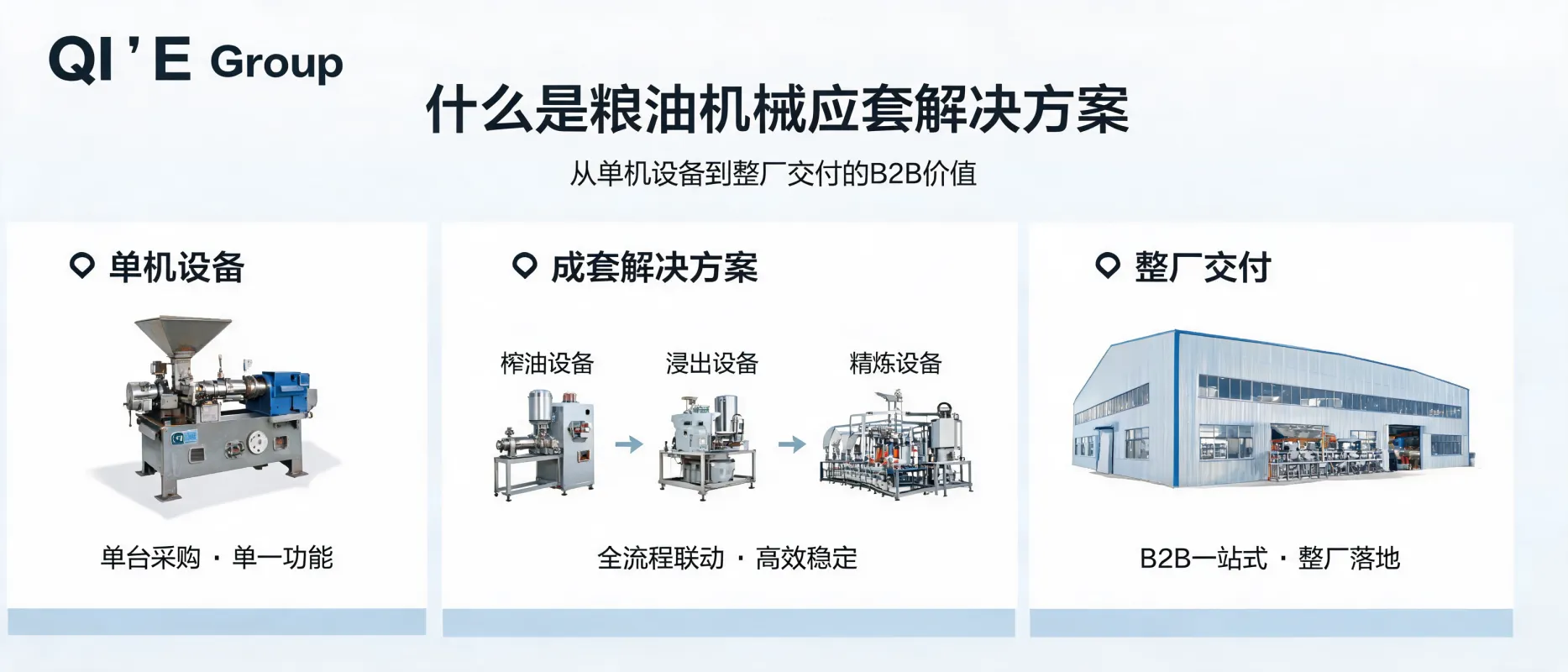
Qi'e Grain and Oil Machinery Co., Ltd. provides soybean oil processing equipment and integrated engineering support for B2B oilseed processing projects. Its solution planning covers equipment selection, process coordination, installation, and technical service according to the project scope and production requirements.
The most suitable system is determined by the complete production route rather than by the extractor alone. A practical evaluation normally includes:
Soybeans, rapeseed, sunflower seed, and peanuts do not behave identically during preparation and extraction. A machine configuration that performs well with one raw material may require adjustments when the feedstock changes. The selection process should therefore begin with a raw-material matrix and a clearly defined production plan.
| Evaluation area | Why it matters | Selection implication |
|---|---|---|
| Oilseed properties | Oil content, moisture, particle structure, and impurities influence preparation and extraction. | The pretreatment and extraction route should be reviewed for each planned feedstock. |
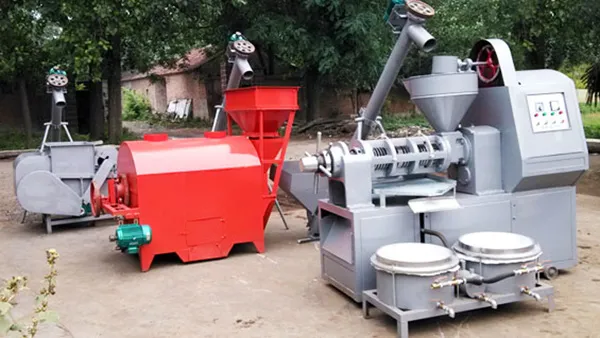
| Flaking and conditioning | Particle size, surface area, and conditioning influence oil release and process stability. | Roll mills and conditioners should be matched to the raw-material range. |
| Extraction route | Mechanical pressing and solvent extraction serve different capacity and recovery requirements. | A project may require pressing, solvent extraction, or a combined process. |
| Changeover requirements | Residual materials and cross-contamination risks can affect product management and scheduling. | Cleaning access, operating procedures, and production sequencing should be considered early. |
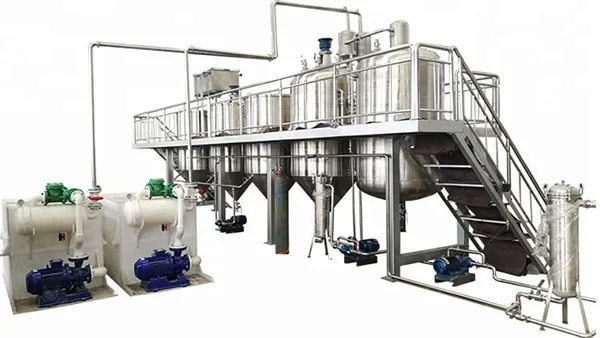
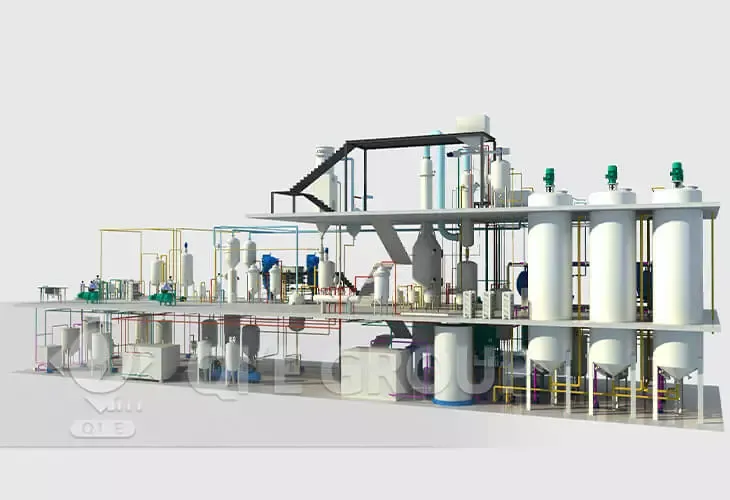
A complete soybean oil production system generally combines preparation, extraction, solvent recovery, crude oil handling, and meal processing. The exact configuration depends on the feedstock, capacity, product requirements, and applicable safety standards.
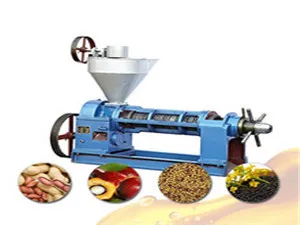
Screw presses apply mechanical force to remove oil and are commonly considered for small- and medium-scale production. They can offer a comparatively straightforward process, although residual oil remains in the soybean cake.
Solvent extraction is generally associated with larger-scale industrial production and high oil recovery. Its selection requires careful attention to solvent recovery, process control, equipment layout, operating procedures, and safety management.
The value of a soybean oil project is not determined by crude oil output alone. Soybean meal is a significant post-extraction material and may require toasting, cooling, or other downstream processing before use, particularly when it is intended for animal feed applications.
Lecithin recovery should also be evaluated as a separate downstream consideration. It is not automatically a direct product of the extraction machine. The project design should define the relevant separation, refining, storage, and quality requirements before equipment is specified.
Planning principle: treat soybean oil, soybean meal, and lecithin-related streams as connected but distinct parts of the project. A comprehensive assessment should consider their processing requirements, potential uses, handling systems, and contribution to total project returns.
For a multi-oilseed project, equipment selection is most reliable when the process route, raw materials, product standards, by-product plan, and site requirements are reviewed together. Qi'e Grain and Oil Machinery Co., Ltd. can support the evaluation of soybean oil extraction and processing equipment, including pretreatment, extraction, oil refining, and related technical services.
Share your target oilseeds, planned capacity, desired products, and operating requirements to develop a soybean oil processing solution that is aligned with the complete project—not only with the extraction stage.
 soybean oil solvent extraction large capacity oil extraction oil yield improvement energy saving in oil production solvent recovery optimization
edible oil production line equipment oil pressing equipment oil refining equipment oilseed processing Qi'e Grain and Oil Machinery Co., Ltd.
edible oil production line oilseed pretreatment oil pressing equipment vegetable oil processing Qi'e Grain and Oil Machinery Co., Ltd.
grain and oil machinery equipment oil pressing production line edible oil refining equipment oil processing solution Qi'e Grain and Oil Machinery Co., Ltd.
edible oil refining equipment refining process deacidification and deodorization equipment selection Qi'e Grain and Oil Machinery Co., Ltd.
soybean oil solvent extraction large capacity oil extraction oil yield improvement energy saving in oil production solvent recovery optimization
edible oil production line equipment oil pressing equipment oil refining equipment oilseed processing Qi'e Grain and Oil Machinery Co., Ltd.
edible oil production line oilseed pretreatment oil pressing equipment vegetable oil processing Qi'e Grain and Oil Machinery Co., Ltd.
grain and oil machinery equipment oil pressing production line edible oil refining equipment oil processing solution Qi'e Grain and Oil Machinery Co., Ltd.
edible oil refining equipment refining process deacidification and deodorization equipment selection Qi'e Grain and Oil Machinery Co., Ltd.



.png?x-oss-process=image/resize,h_100,m_lfit/format,webp)
.png?x-oss-process=image/resize,h_100,m_lfit/format,webp)
.png?x-oss-process=image/resize,h_100,m_lfit/format,webp)
.jpg?x-oss-process=image/resize,h_800,m_lfit/format,webp)

.jpg?x-oss-process=image/resize,m_fill,h_800,w_800/format,webp)


